
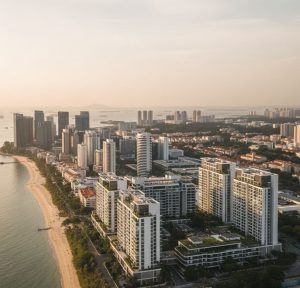
The rise of Vela Bay Bayshore outweighs the fact that residential developments are becoming more intertwined with business strategy, metropolitan planning and positioning of long-term capital. This is a private condominium project in Bayshore, Singapore. And as such, it is an indication of a wider trend in which housing projects are assessed based on lifestyle. Economic activity, workforce mobility and commercial sustainability are also factors for assessment.
Residential real estate is a supporting feature in business-oriented cities that have to anchor talent in the vicinity of transport, commercial areas, and other important services. The transformation of Bayshore into a contemporary residential node provides a vivid example of how location-based trends can have a significant impact on business ecosystems.
Location as a Business Competitiveness
Location is a repetitive criterion of success in business. Housing projects located close to transportation systems and places of work minimize pressure in everyday activities. Bayshore gives a private condominium the advantage of being integrated into the transport system of Singapore. It provides efficient access to the business central districts and industrial zones.
It also attracts those who will not compromise the quality of residence to connectivity. In the case of businesses, this will mean a more predictable labor force. There will also be less turnover indirectly reinforcing business performance and output.
Macro-wise, residential projects that promote the availability and accessibility of workforce make a city competitive in business destinations.
Corporate Mobility and Residential Real Estate
Residential availability is becoming a major concern to the global business in terms of expansion or repositioning of operations. Cities with well-organized housing facilities around business hubs get a competitive advantage over the attraction of multinational companies and head offices.
The need is met by the private condominiums in Bayshore that provide houses. They are in line with the international living standards yet being part of other urban structures in Singapore. This orientation facilitates the mobility of the corporation since newly recruited professionals are able to get appropriate residences without undergoing extended adaptation.
Investment Confidence and Market Stability
The predictability of the market is a close correlation with business confidence. The regulatory climate, clear property legislation, and strict financial regulations in Singapore offer an uninterrupted investment environment in the long run, which includes residential real estate.
Vela Bay is one of the companies that have applied this framework, making it less exposed to speculative volatility through controlled supply and steady demand. To business investors and institutional stakeholders, this stability would favor the preservation of capital with a moderated growth.
Real estate in strategic locations can be used to supplement much wider investment portfolios as tangible assets that offset the higher-risk financial instruments.
Fostering Business Lifestyles and Productivity
Residential settings that facilitate work-life balance have become the top priority of the modern business people. Being close to green areas, leisure places, and other facilities leads to well being that consequently influences productivity and performance.
Assets and Business Integration on a Long-term Basis
Strategically, residential developments must be perceived as a component of a bigger economic system, in lieu of being individual projects. Housing also has impacts on labor markets, consumer spending, and demand for services. All are factors that impact business development.
Bayshore has a private condominium that serves the local economic circulation through supporting retail, transportation, service industries. In the long run, this enhances the commercial viability of the surrounding areas building on the business ecosystem. To the decision-maker, these interdependencies can be understood to enable them to plan and be more aligned in their investments.
Corporate Responsibility and Sustainability
There is no longer an option of sustainability in business planning. The urban sprawl is minimized in residential development around existing infrastructure and enhances efficient land use, both of which are environmental and corporate responsibility objectives.
The inclusion of private condominiums within an established urban structure in Bayshore can also facilitate sustainable commuting behavior and responsible development. This strengthens the fact that Singapore is a city that balances economic development and long term environmental stewardship.
ALSO READ: OECD Urges G20 Business Organizations to Give Importance to ESG Ratings
Conclusion
Vela Bay Bayshore is an example of how residential developments can be used to serve the needs of larger business and economic goals. In matching location strategy, workforce requirements and long-term planning, Bayshore private condominiums can help lead to a competitive and robust urban environment. With the ever-evolving businesses determining cities by the challenging factors of talent, infrastructure, and stability, such changes have been part of sustainable development.


